Healthy Gujarati Food Swaps: Keep the Flavour, Lose the Heaviness
Gujarati food is delicious, but it can be heavy on oil, sugar and fried snacks. These healthy Gujarati food swaps keep the flavours you love while making meals lighter.
Gujarati food is one of India's great cuisines — sweet, sour, spicy and comforting all at once. Traditional meals include a lot that's good for you: dals, seasonal shaak, chaas, fermented dhokla and handvo. But modern habits have tipped the balance towards more oil, sugar and fried snacks. These healthy Gujarati food swaps keep the flavours you love while making everyday meals lighter.
Why small swaps beat strict diets
Giving up dhokla, thepla and undhiyu forever isn't realistic, and it isn't necessary. Small changes repeated daily add up to a big difference — and they're far easier to stick with. India's ICMR–NIN dietary guidelines emphasise limiting oil, sugar and salt and eating more vegetables and pulses, which is exactly what these swaps do.
Healthy Gujarati food swaps for meals
Dal
- Swap: thin, sweet dal → thicker dal with less jaggery
- More lentils means more protein; less sugar is easy to adjust to over a few weeks
Shaak
- Swap: shaak swimming in oil → shaak with a measured tablespoon of oil and more vegetables
- Add a second vegetable to stretch the dish and add fibre
Rotli and bhakri
- Swap: rotli with ghee on every piece → rotli with a little ghee on one
- Try mixing jowar, bajra or ragi flour into your atta
Rice
- Swap: a mound of rice → a smaller portion and more dal or kadhi
Kadhi
- Keep it — curd-based kadhi is light. Just go easy on sugar.
Thepla
- Swap: fried in oil → roasted on a tawa with minimal oil
- Add extra methi or grated vegetables
Healthy swaps for farsan and snacks
Farsan is where most of the extra oil sneaks in.
| Instead of | Try |
|---|---|
| Fried chevdo | Roasted poha chevdo or makhana |
| Sev and ganthiya | Roasted chana or peanuts |
| Fried kachori | Steamed handvo or idada |
| Bhajiya | Sprouts chaat or a salad |
| Fried fafda | Khakhra (in moderation) |
Steamed snacks like dhokla, khaman, idada and handvo are naturally lighter — they're some of the best healthy Gujarati food you can eat. Fermented batters like these are also easy to digest, and adding grated vegetables to handvo makes it even better.
Healthy swaps for sweets
- Swap: daily mithai → mithai on occasions, fruit on regular days
- Swap: sugary shrikhand → hung curd with fruit and a little honey
- Swap: sweetened chai several times a day → less sugar, fewer cups
The WHO recommends keeping free sugars under 10% of daily energy — and ideally under 5%.
Add what's missing: protein and raw vegetables
The biggest gap in many Gujarati meals isn't what's there, it's what's missing: protein and raw vegetables.
- Add a kachumber or sprout salad to every lunch
- Have curd or chaas daily
- Include paneer, chana or moong several times a week
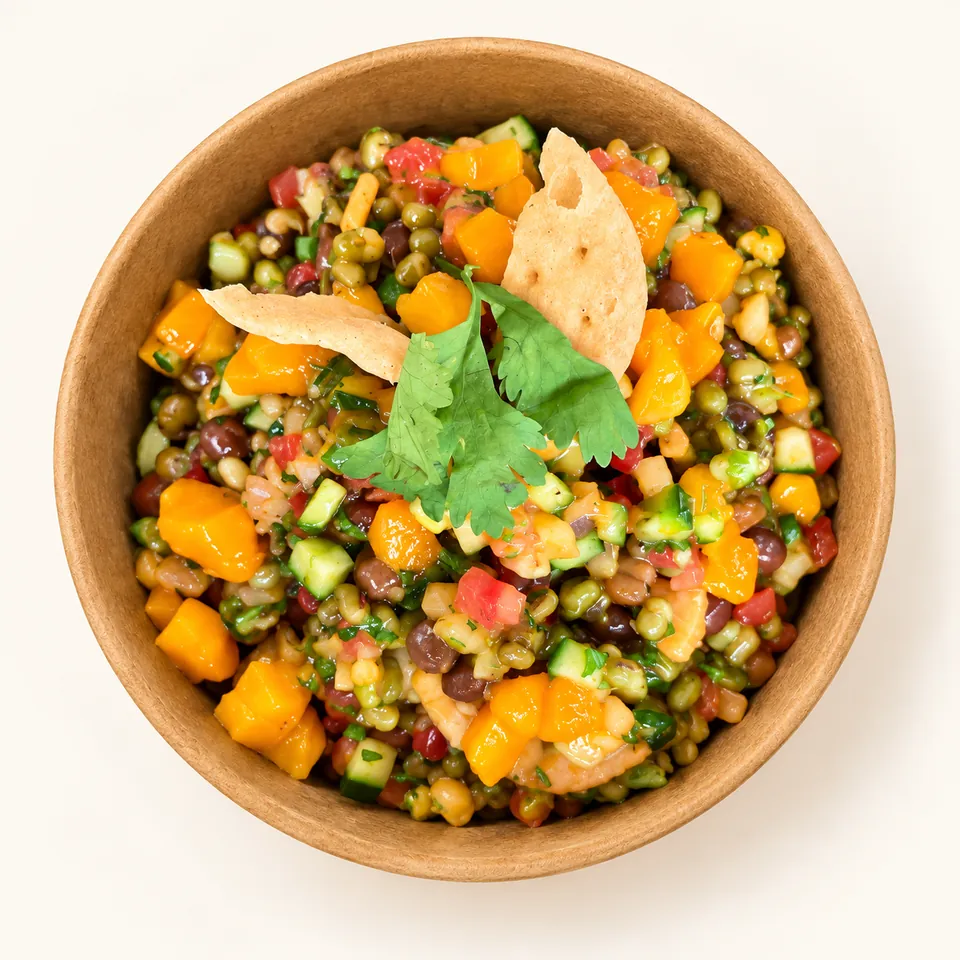
Our Desi Mango & Sprout Salad is a good example of Gujarati-style flavour — sweet, tangy, a little spicy — in a protein-rich salad. For more ideas, see high-protein vegetarian salad ideas.
A lighter Gujarati thali
Here's what a balanced everyday thali might look like:
- Thick dal (a full bowl)
- Two shaak, cooked with less oil
- Two rotli (one with a little ghee)
- A small portion of rice
- A big kachumber or sprout salad
- A glass of chaas
Same flavours, much better balance. You'll likely find you feel lighter after meals and have more energy in the afternoon — without anyone at the table feeling they're on a diet.
When you don't have time to cook
Busy weekdays are when the healthy plan usually falls apart. On those days, a protein-rich salad bowl is a light, satisfying alternative. We deliver across Vadodara from 11 am to 9 pm — see the menu, or let our salad subscription handle your weekday lunches.
Making swaps stick at home
Changing family recipes can meet resistance — nobody wants their mother's dal to taste different. A few tips:
- Change one dish at a time. Start with the one you eat most often.
- Reduce gradually. Cut sugar or oil by a quarter for a couple of weeks, then a little more. Most people don't notice.
- Add rather than remove. An extra vegetable or a bowl of salad is an easy sell.
- Keep the tempering. Jeera, rai, hing and curry leaves carry so much flavour that you can use less oil without losing taste.
Healthy eating works best when the whole household joins in — and when nobody feels deprived.
Healthy Gujarati food when eating out
Vadodara has wonderful Gujarati thali restaurants, and you don't need to avoid them. Start with the dal, kadhi and vegetables, take fewer puris and less rice, go easy on the sweet dish, and choose chaas over a sweetened drink. Steamed farsan like dhokla or khaman is a better pick than fried items. Unlimited thalis are designed for abundance — you can enjoy them without finishing every refill.
The bottom line
Healthy Gujarati food isn't about giving up the food you grew up with. Cut back on oil and sugar, choose steamed over fried, and add more protein and fresh vegetables. Small swaps, big difference.
Frequently asked questions
Is Gujarati food healthy?+
Traditional Gujarati food has many healthy elements — dals, vegetables, buttermilk, fermented foods. It can become heavy with lots of oil, sugar and fried farsan, which simple swaps can fix.
What are healthy alternatives to farsan?+
Roasted chana, roasted makhana, steamed dhokla, sprouts chaat, khakhra in moderation and fresh fruit are lighter alternatives to deep-fried snacks.
How can I reduce sugar in Gujarati cooking?+
Gradually cut the jaggery or sugar in dal and shaak, rely more on tamarind, lemon and spices for flavour, and keep sweets for occasions.