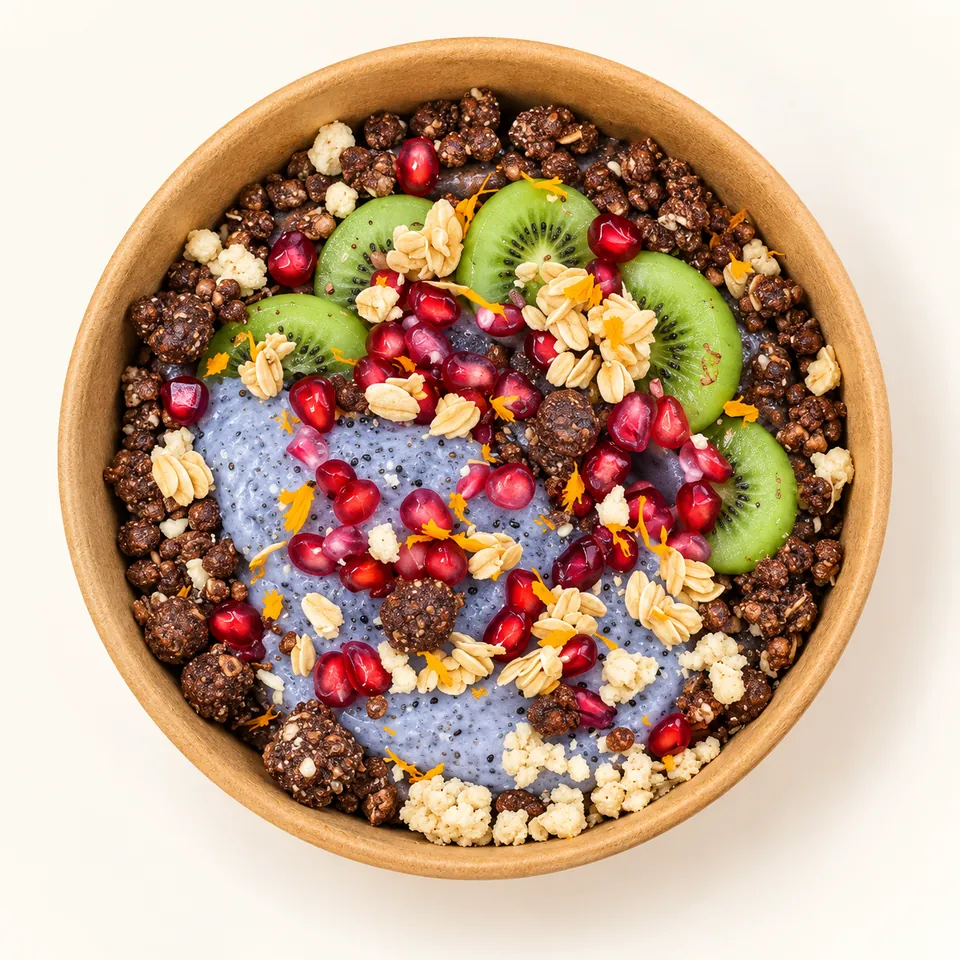
How to Build a Balanced Salad Bowl That Actually Keeps You Full
A salad can be a proper meal — if it has the right parts. Here's the simple six-part formula our kitchen uses to build a balanced salad bowl that keeps you full until dinner.
A lot of people give up on salads because an hour later they're hungry again. That isn't a salad problem — it's a building problem. A balanced salad bowl needs more than leaves. When we design a bowl at Leafli, we check it against the same six building blocks every time.
The six parts of a balanced salad bowl
1. A generous base of vegetables
Leafy greens, crunchy vegetables and a little fruit give you fibre, vitamins and volume for very few calories. The World Health Organization recommends eating at least 400 g of fruit and vegetables a day — a good salad can cover a big share of that in one meal.
Tip: mix textures. Crisp lettuce, juicy cherry tomatoes and shredded purple cabbage feel more satisfying than one kind of leaf.
2. A real portion of protein
Protein is what turns a side salad into lunch. It slows digestion and helps you stay full. Good options:
- Chickpeas, moong sprouts or other legumes
- Paneer, mozzarella or hung curd
- Eggs
- Grilled chicken
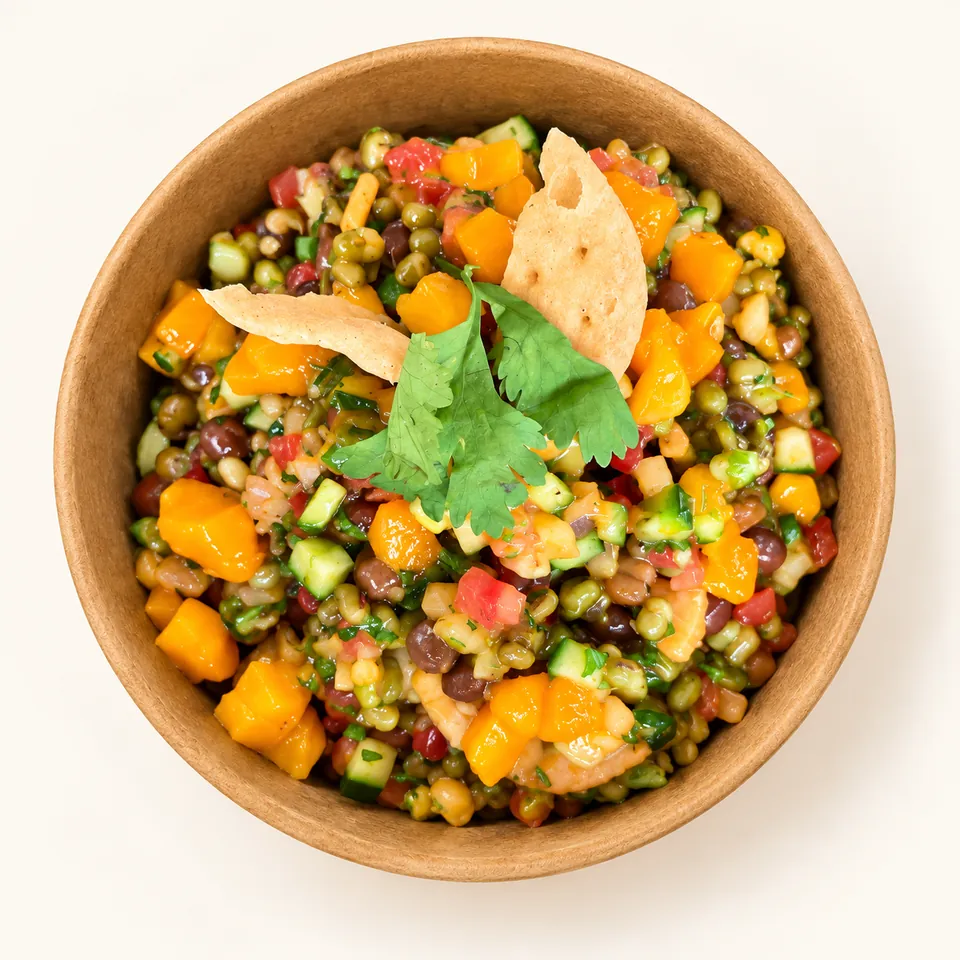
Our Desi Mango & Sprout Salad uses both chana and moong, while the Classic Chicken Caesar pairs grilled chicken with eggs.
3. Some slow-release carbohydrates
A small portion of grains, noodles, potatoes or legumes gives you steady energy for the afternoon. Think roasted potatoes, rice noodles or extra chana — enough to fuel you, not so much that you get sleepy.
4. Healthy fats
Fat carries flavour and helps your body absorb fat-soluble vitamins from the vegetables. Nuts, seeds, a cold-pressed oil dressing, avocado or cheese all count. A little goes a long way — we weigh ours to the gram.
5. Something crunchy
Crunch makes a bowl satisfying to eat. Toasted seeds, peanuts, walnuts, croutons or granola all work. Add them at the last minute so they stay crisp — which is why our crunchy toppings travel separately.
6. A dressing with personality
A good dressing ties everything together. Bright acidity (lemon, vinegar), something savoury, and a touch of sweetness or heat. Keep it on the side until you're ready to eat so your greens don't wilt.
A balanced salad bowl, by the numbers
There's no single perfect ratio, but this is a useful starting point for one bowl:
| Part | Roughly |
|---|---|
| Vegetables & greens | Half the bowl |
| Protein | A quarter of the bowl |
| Slow carbs | A small handful |
| Healthy fats & crunch | 1–2 tablespoons |
| Dressing | 2–3 tablespoons, on the side |
Common mistakes that leave you hungry
- Leaves only. Without protein and some carbs, a salad won't last you till evening.
- Drowning it in dressing. Too much turns a fresh bowl heavy. Start with less; you can always add more.
- Dressing it too early. Pre-dressed salads go soggy fast. Toss just before eating.
- No variety. Rotating your bowls through the week keeps it interesting — and gives you a wider range of nutrients.
Three balanced salad bowl ideas to try this week
The desi protein bowl. Chana and moong sprouts for protein, cucumber, tomato and onion for crunch, diced mango for sweetness, and a squeeze of lemon with chaat masala. Finish with a tangy mango-chilli dressing on the side. It's light, but the legumes keep you going all afternoon.
The Mediterranean-style bowl. A bed of rocket and lettuce, slices of tomato and fresh mozzarella, plenty of basil, a few toasted pine nuts and a basil-walnut pesto. The cheese brings protein and fat, so a modest portion is satisfying.
The warm-and-cool bowl. Roasted potatoes (cooled), crisp apple, lettuce, cherry tomatoes and walnuts, with a creamy, tangy egg-based dressing. The potatoes cover your slow carbs and the walnuts add healthy fats.
Each of these hits all six parts of a balanced salad bowl — vegetables, protein, slow carbs, healthy fats, crunch and dressing — in a different way, so you can rotate them without getting bored.
Adjusting your bowl for different goals
- More energy for workouts: add an extra portion of slow carbs such as noodles, potatoes or legumes.
- Feeling hungry by 4 pm: increase the protein first, then the healthy fats.
- Lighter dinner: keep the vegetables generous and go easy on carbs and dressing.
- Managing a health condition: portions matter more than rules — check with a doctor or registered dietitian.
Building a balanced salad bowl on a budget
Eating well doesn't need imported ingredients. Some of the best-value building blocks are already in an Indian kitchen:
- Seasonal vegetables — cabbage, carrot, cucumber, tomato and onion are cheap, crunchy and last well.
- Dried legumes — a kilo of dried chana or moong makes many portions of protein once soaked and cooked.
- Peanuts and sesame — affordable crunch and healthy fats; toast them for more flavour.
- Homemade dressings — lemon, curd, mint, cumin and a little oil cost a fraction of bottled dressings.
- Seasonal fruit — mango in summer, oranges and guava in winter add sweetness for very little.
Buy whole vegetables rather than pre-cut, cook legumes in batches, and plan bowls around what's in season.
Make it easy to stick with
The hardest part of eating well is doing it every day. If you'd rather not plan and chop, a salad subscription delivers a balanced bowl on the days you choose, with dressings packed separately so it arrives crisp.
Start with a few bowls a week, notice how you feel in the afternoons, and build from there.
Frequently asked questions
Can a salad be a complete meal?+
Yes, if it includes vegetables, a real portion of protein, some slow-release carbohydrates, healthy fats and a dressing. Leaves alone won't keep you full.
How much protein should a salad have?+
Aim for a palm-sized portion of protein — legumes, paneer, eggs, chicken or cheese — so the bowl keeps you satisfied for several hours.
Why should dressing be kept separate?+
Dressing makes leaves wilt and crunchy toppings go soft. Adding it just before eating keeps the salad crisp.