High Protein Vegetarian Food in Vadodara: A Practical Guide
Vadodara eats mostly vegetarian — and getting enough protein can be tricky. Here's how to find and build high-protein vegetarian food in Vadodara, from paneer to sprouts.
Vadodara is one of the most vegetarian cities in India, and its food is wonderful — dal, shaak, rotli, farsan. What it isn't always is high in protein. If you're trying to build muscle, lose weight or simply stay full between meals, finding high protein vegetarian food in Vadodara takes a bit of planning. Here's a practical guide from our kitchen.
How much protein do you actually need?
For healthy adults, the ICMR–National Institute of Nutrition recommends roughly 0.8–1 g of protein per kilogram of body weight per day. A 65 kg adult needs around 52–65 g. People who train regularly often aim higher; the International Society of Sports Nutrition suggests 1.4–2 g per kg for active people.
The challenge for vegetarians isn't that protein is unavailable — it's that typical meals are cereal-heavy. A plate of rice and a thin dal might give you only 10–12 g.
The best vegetarian protein sources
Here are the foods that do the heavy lifting:
- Paneer — about 18 g protein per 100 g
- Hung curd / Greek yoghurt — about 8–10 g per 100 g
- Chana, rajma and other legumes — about 7–9 g per 100 g cooked
- Moong sprouts — light, crunchy and easy to add to anything
- Soya chunks and tofu — among the most protein-dense plant foods
- Mozzarella and other cheeses — rich, so enjoy in sensible portions
- Peanuts, seeds and nuts — great for crunch, plus healthy fats
Mixing cereals with pulses (like dal with rice, or noodles with sprouts) improves overall protein quality — something Indian food has done for centuries.
High protein vegetarian food in Vadodara: building a meal
A simple formula for a filling veg meal:
- Start with a protein anchor — 100 g paneer, a cup of chana or sprouts, or a mix
- Add a big pile of vegetables — for fibre and volume
- Include a small portion of carbs — noodles, potatoes or a roti
- Finish with healthy fat and crunch — seeds, nuts or a good dressing
Salad bowls are perfect for this because you can see exactly what's in them. Our guide to building a balanced salad bowl explains the formula in more depth.
Our high-protein vegetarian bowls
These are the Leafli bowls our vegetarian regulars reach for when protein matters:
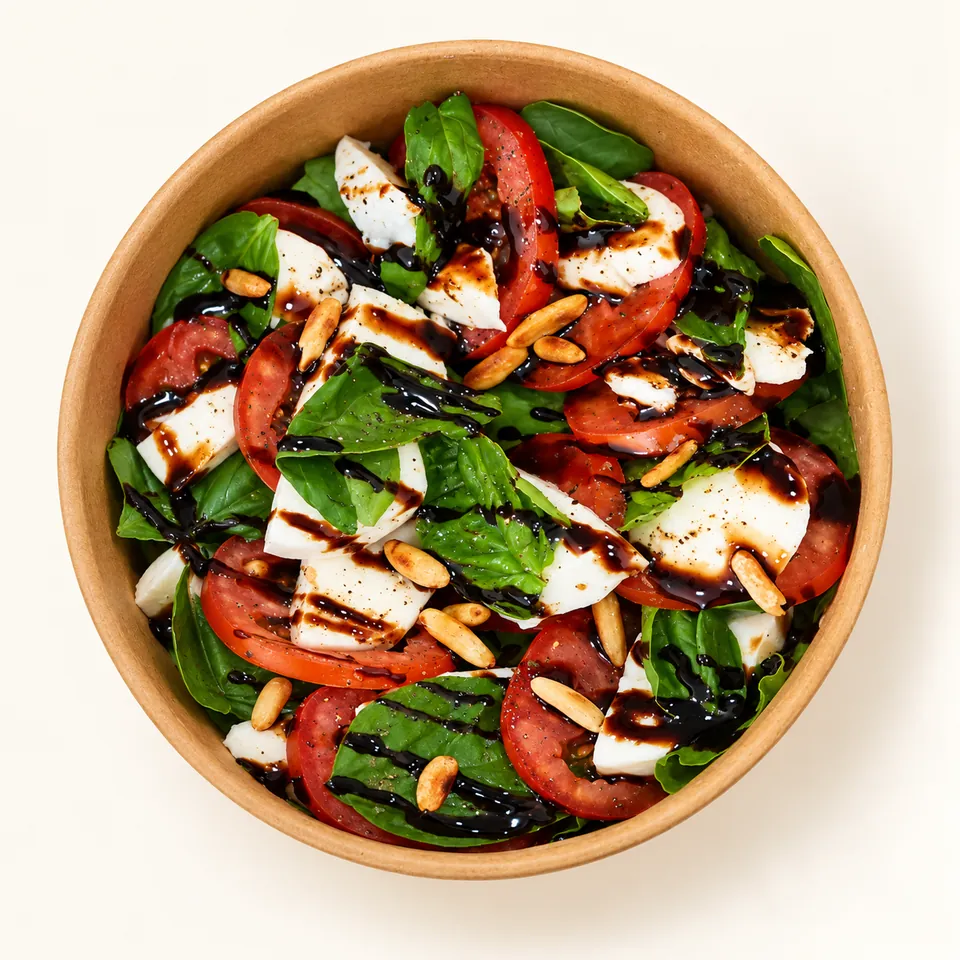
- Salad Caprese — tomato, mozzarella and basil pesto; one of our highest-protein veg bowls
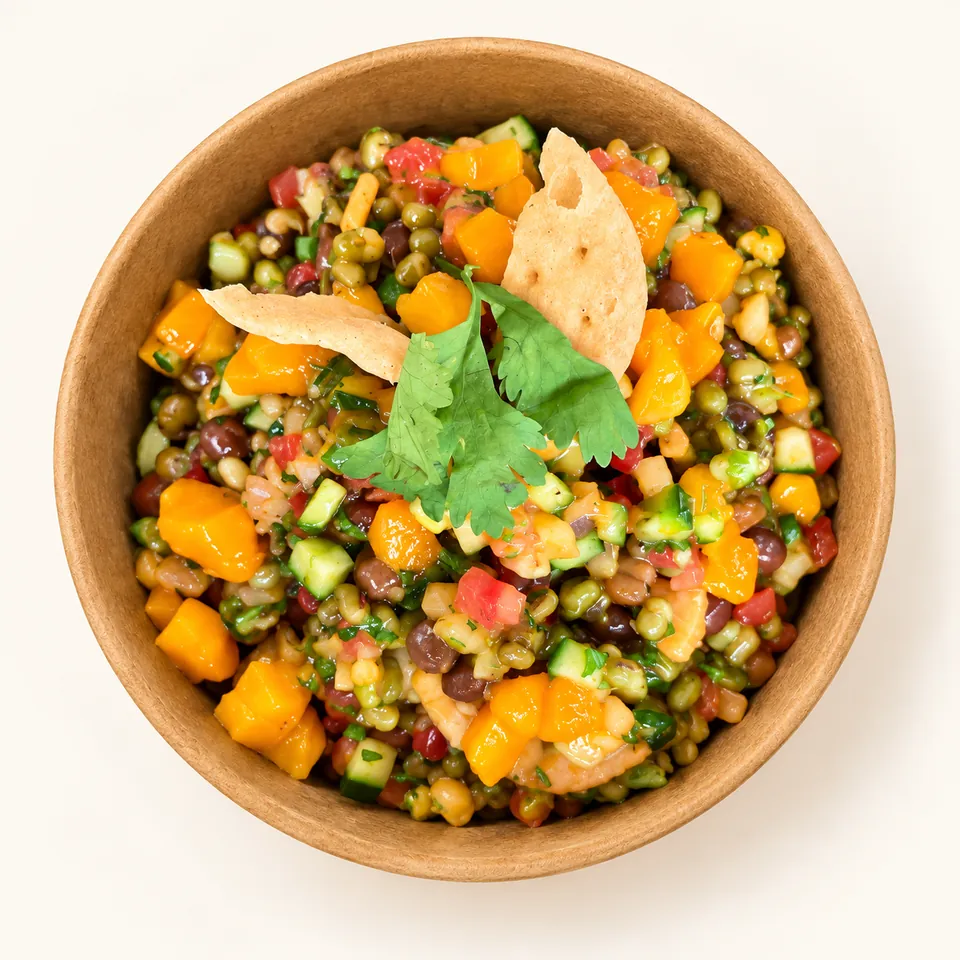
- Desi Mango & Sprout Salad — chana and moong with mango, a familiar chaat-style flavour
- Roasted Potato & Apple Salad — a lighter egg bowl when you want comfort food
Protein and calories for each are listed on the dish page, so you can plan your day.
Easy protein upgrades for everyday Gujarati meals
You don't need to give up home food. Small changes add up:
- Add a bowl of curd or chaas to lunch
- Swap one roti for a besan chilla or moong dal chilla at breakfast
- Snack on roasted chana or sprouts chaat instead of farsan
- Add paneer to your sabzi a few times a week
- Have a salad with sprouts before your main meal
For more ideas, read our high-protein vegetarian salad ideas.
Common mistakes to avoid
- Relying only on dal. It helps, but a typical bowl is often watery and low in protein.
- Going too heavy on cheese. It's protein-rich but also high in fat — balance it with legumes.
- Forgetting breakfast. Tea and biscuits give almost no protein; add curd, milk or a chilla.
- Skipping vegetables to "make room" for protein. Fibre is what keeps digestion and appetite steady.
A sample high-protein vegetarian day
Here's roughly how a 65 kg vegetarian could reach 60 g or more without supplements:
- Breakfast: two moong dal chillas with curd — about 15–18 g
- Mid-morning: a handful of roasted chana — about 6–7 g
- Lunch: a paneer or legume salad bowl — about 20–28 g
- Evening: a glass of chaas and peanuts — about 6–8 g
- Dinner: thick dal, sabzi and two rotli — about 12–15 g
That adds up to roughly 60–75 g, entirely from familiar foods. The amounts are approximate and vary with portion sizes and recipes, but the pattern matters more than precision: protein at every meal, not just one.
Eating out as a vegetarian in Vadodara
When you're eating out, protein is often the first thing to go missing. Paneer tikka, dal, chana masala and curd-based dishes are your friends on most menus. At chaat stalls, sprout bhel or chana chaat beats pani puri for protein. And when ordering in, check the dish page for a protein figure — if a kitchen lists it, it's a sign they've thought about nutrition.
Make it easy on busy days
The hardest part of eating enough protein is consistency. If you work long hours in Alkapuri or study near MSU, cooking a protein-rich lunch every day isn't realistic. Our Protein Pro plan delivers high-protein bowls on the days you choose — vegetarians get the veg version — with delivery included anywhere in Vadodara.
High protein vegetarian food in Vadodara is easier to find than you'd think — you just need to know what to look for. Start with one protein-rich bowl a day and build from there. Browse the full menu to begin.
Frequently asked questions
How much protein do vegetarians need per day?+
ICMR–NIN suggests about 0.8–1 g of protein per kg of body weight for healthy adults. People who train hard often aim higher; a dietitian can advise for your goals.
What are the best vegetarian protein sources in India?+
Paneer, curd and hung curd, milk, chana, rajma, moong and other dals, sprouts, soya, tofu, peanuts and seeds. Combining cereals with pulses improves protein quality.
Which Leafli salads are high in protein?+
The Salad Caprese is one of our highest-protein vegetarian bowls, and the Desi Mango & Sprout Salad uses chana and moong. Each dish page lists its protein and calories.